
european defence fund
CALLS FOR PROPOSALS
UPCOMING EVENTS
KEY ACHIVEMENTS
FURTNER INFORMATION
CONTACT
The European Defence Fund (EDF) is an EU incentive initiative and financial instrument designed to support research and development in the European defence industry, enhance its competitiveness and stimulate multinational industrial cooperation. It is funded with approximately €8 billion from the European Union’s Multiannual Financial Framework. (Regulation (EU) 2021/697 of the European Parliament and of the Council – jogkodex.hu)
The primary objective of the EDF is to strengthen the collective security of EU Member States by promoting the integration and efficiency of the European defence market—primarily through the reduction of duplication, the intensification of cooperation and the lowering of Europe’s dependence on non-EU defence technologies.
A key focus of the EDF is the targeted support of cross-border small and medium-sized enterprises (SMEs), as defined in Article 2 of the Annex to Commission Recommendation 2003/361/EC, as well as mid-cap companies (non-SMEs with fewer than 3,000 employees, calculated in accordance with Articles 3–6 of the same Annex).
Support for cross-border projects capable of cooperation in the field of research and development (R&D), aimed at advancing defence technologies and capabilities.
Contribution to the competitiveness and innovation capacity of the European Defence Technological and Industrial Base (EDTIB) by encouraging the involvement of SMEs and actors less active in the defence sector.
Reduction of fragmentation within Europe’s defence and industrial landscape.
Promotion of increased defence spending, based on the principle that more resources should be used more efficiently through joint efforts.
Strengthening Europe’s resilience and defence autonomy, including by progressively reducing its technological dependence on third countries.
Support for integrating climate considerations into EU policies, contributing to the broader objective that 30% of the EU’s budgetary expenditure should promote climate-related goals.
The use of the EDF must primarily reflect the expectations of EU Member States.
Selectivity must be applied in project support.
Complementarity and consistency must be ensured with the priorities established jointly by EU Member States, within the framework of other defence initiatives and the North Atlantic Treaty Organisation (NATO).
Focus is placed on projects that offer real strategic and economic benefits to Europe, which can only be achieved through collective implementation and which enhance the responsiveness of European armed forces.
Continuity must be maintained with already supported and completed actions.
Inclusiveness: ensuring fair access to the EDF for companies of any size from any EU Member State or associated country (e.g. Norway).
Fostering innovation: 4–8% of the EDF budget is to be allocated to the development of breakthrough technologies.
Creation of synergies: (i) with other EU programmes, both to avoid unnecessary double funding and to enable cross-financing; (ii) between civilian and military R&D activities.
The EDF must not contribute to the development of defence capabilities prohibited under international law, nor to the development of lethal autonomous weapons.
In February 2021, the European Union included the promotion of synergies between civil, defence and space-related research and development in its Action Plan on Synergies. The plan underlined the need to enhance complementarity among EU programmes and tools to boost investment, increase efficiency and improve outcomes. Under the 2021–2027 Multiannual Financial Framework, the EU is steadily increasing investments in civil, defence and space technologies through research, development and deployment programmes such as Horizon Europe, the Digital Europe Programme (DEP), the Connecting Europe Facility (CEF), the Internal Security Fund, the EDF and the EU Space Programme—supporting the procurement of innovative, cross-sectoral technological solutions.
The European Defence Fund (EDF) and its predecessor programmes are based on a capability-driven approach, taking into account existing EU defence priorities and the tools and processes supporting national and EU-level decision-making. This approach facilitates the convergence of Member States’ defence planning and serves as a reference for more coherent development of European defence capabilities.
Defence-related R&D planning is carried out within the EDF framework. Cohesion policy programmes may also contribute to defence R&D, provided they comply with rules on shared management. Other funding instruments typically focus on civil applications, although relevant regulations often include provisions for dual-use products. For instance, in the field of civil protection, rescEU provides funding for Member States and participating countries to develop EU-level capacities for responding to chemical, biological, radiological and nuclear disasters, where national capabilities prove insufficient.
In February 2022, the Roadmap on Critical Technologies for Security and Defence recognised that existing programmes and tools lacked sufficient resources for the direct support of dual-use activities. It announced that “in 2023, the Commission will review existing EU instruments and promote EU-level incentives for dual-use research and innovation (R&I).” The Commission also analysed the opportunities and limitations of strengthening support for dual-use technologies within the EU’s defence innovation ecosystem.
In May 2022, a joint communication titled Analysis of Defence Investment Gaps and Way Forward identified potential adjustments to the R&D framework for dual-use technologies and suggested improvements in synergies between civil and defence instruments. To address these priorities, the EDF provides financial support for the development of strategic enablers and key capabilities, with Member States cooperating to address them through approved PESCO projects.
The first progress report on the Action Plan, adopted in November 2022, also acknowledged the necessity of this effort.
In June 2023, the Commission adopted a regulation proposal to establish the Strategic Technologies for Europe Platform (STEP) to maintain Europe’s edge in emerging technologies relevant to green and digital transitions. This includes computing-related technologies such as microelectronics, cloud computing, quantum computing and artificial intelligence, as well as biotechnology, biomanufacturing and net-zero technologies. In addition to increasing EDF funding, STEP will enhance EU co-financing through cohesion policy instruments to support the development or production of critical technologies—many of which have dual-use potential.
The Regulation (EU) 2024/795 of the European Parliament and Council, adopted on 29 February 2024, establishes the STEP, which is expected to increase funding available for EDF projects by €1.5 billion between 2024 and 2027. In October 2023, the Commission published its recommendation on critical technology areas and launched a joint risk assessment in cooperation with Member States.
EDF National Focal Point (NFP) (Network of European Defence Fund National Focal Points – European Commission): Dr. András Levente Balog (Balog.andras.Levente@hm.gov.hu)
VIKI – EDF Contact Person: Dr. László Szatmári (szatmari.laszlo@defenseinnovation.hu)
The NFPs support the implementation of the European Defence Fund by working in close cooperation with the European Commission’s DG DEFIS. They provide guidance and advice to national applicants and beneficiaries interested in the EDF programme and assist in forming partnerships (consortia) during EDF implementation.
Support for EDF Proposal Preparation and R&D Activities of Funded Projects:
National-level support (national authority responsibilities) is carried out by the Ministry of Defence of Hungary and the Defence Innovation Research Institute Nonprofit Plc. (VIKI – Defence Innovation Research Institute, defenseinnovation.hu) in accordance with Government Decree No. 368/2023 (VIII. 7.).
(368/2023. (VIII. 7.) Government Decree – jogtar.hu)
On February 4, 2026, the European Commission announced changes to the European Defence Fund (EDF) work program for 2026. The measures aim to reduce administrative burdens, improve access to calls for proposals, and strategically expand EU investment in defence research, development, and innovation.
The most important changes are:
Further information: https://defence-industry-space.ec.europa.eu/changes-edf-work-programme-simpler-procedures-and-expanded-investment-areas-2026-02-04_en
Significant funding will continue to be available in 2026 under the European Defence Fund (EDF), which offers an excellent opportunity to develop defence and dual-use technologies and participate in international cooperation.
Who can apply?
Find out about the latest EDF calls for proposals and discover how you can successfully participate in innovative European projects.
Deadline for submitting proposals: September 2026
The EDA B2B Platform is an online business matchmaking tool launched by the European Defence Agency (EDA) in 2019 with the aim of facilitating international cooperation in the defence industry and research.
The primary objective of the platform is to respond to the increased need for networking, which is becoming increasingly important as a result of new European defence initiatives (e.g., the European Defence Fund – EDF).
The system is free to use and allows defence industry players, research institutes, universities, and other relevant organizations registered in the EU to register and publish their partnership requests. Through the platform, registered entities can publish requests or share their partner search needs anonymously, thus supporting the development of reliable partner networks within Europe.
We recommend that our partners register, as experience shows that it greatly facilitates EDF partner searches.
Registration and further information: https://b2bplatform.eda.europa.eu/
Currently there are no available calls.
In joint cooperation of the Ministry of Defence of Hungary, the Defence Innovation Research Institute, and the Hungarian Development Promotion Office, a professional event will be organised focusing on the calls for proposals of the European Defence Fund, as well as other international funding and cooperation programmes related to the field of defence.
The aim of the event is to present the current international calls for proposals, share practical experiences, and support domestic actors in successfully attracting funds.
We recommend participation to all those who possess, in their business or research, innovative ideas, dual-use technology, products and tools under development that can be applied in the defence sector, and who would like to receive support, funding, and partners to continue and implement their work through the grant system of the European Defence Fund.
Date: 31 March 2026 (Tuesday)
Venue: Budapest, Bálna National Defence Centre – Hadik Hall
If you would like to participate at the event, please register by 23 March 2026 at the link below.
Programme
09:00–09:30 – Arrival, registration
09:30–09:40 – Welcoming remarks
09:40–09:50 – Opening
09:50–10:30 – Panel Discussion: Status of EDF Implementation
10:30–11:00 – Coffee Break
11:00–11:45 – Presentation – EDF (ENDR)
11:45–12:15 – Presentation – NATO (DIANA, NIF)
12:15–12:45 – Fireside chat – EDF
12:45–13:00 – Roundtable Discussion: Defence Research, Development, Innovation, and the Defence Industry
13:00–14:00 – Lunch Break
14:00–14:30 – Roundtable Discussion: EDF Applicants’ Experiences
14:30–15:00 – Roundtable Discussion: EDF Supporters’ Experiences
15:00–16:00 – Networking
We hope to see you at the event!
Results from the 2021 EDF Call
From the projects selected in July 2022 under the 2021 EDF call, the following projects included Hungarian consortium members:
EUROHAPS – C3S Electronics Development LLC.
5G COMPAD – NOKIA Solutions and Networks Ltd., BHE Ltd.
iFURTHER – BHE BONN Hungary Elektronikai Ltd.
FARADAI – SZTAKI
NOMAD – F4STER-FUTURE 4 Plc.
COUNTERACT – National Public Health Center (under the ERINHA framework)
ALTISS – SAGAX Ltd.
Total EU funding awarded to Hungarian legal entities: €6,195,123
(Source: European Commission – Funding & Tenders Opportunities, SEDIA)
Results from the 2022 EDF Call
From the projects announced in June 2023 under the 2022 EDF call, Hungarian involvement was as follows:
EUCINF – CYEX Ltd.
FACT – NOKIA Solutions and Networks Ltd.
iMEDCAP – Composite Project Ltd.
TRAVISMOS – Continest Technologies Plc.
FEDERATES – HM Ei Plc.
Total EU funding awarded to Hungarian legal entities: €8,526,455
Results from the 2023 EDF Call
From the 2023 EDF call results announced in May 2024, the following projects involved Hungarian stakeholders:
CALIPSO – Defence Innovation Research Institute Nonprofit Plc.
RESILIENCE-R-2023 – National Public Health and Pharmaceutical Center
Total EU funding awarded to Hungarian legal entities: pending confirmation.
Results from the 2024 EDF Call
In April 2025, the winning projects from the 2024 EDF call were announced. The following projects included Hungarian participants:
READYMED EUROPE – NOKIA Solutions and Networks Ltd.
EUROSWEEP – CyEx Ltd.
BEAST – SciEngineer Ltd., Wysio Ltd.
RESILIENCE-R-2024 – National Public Health and Pharmaceutical Center
Total EU funding awarded to Hungarian legal entities: to be confirmed.
Results from the 2025 EDF Call
In April 2026, the winning projects from the 2025 EDF call were announced. The following projects included Hungarian participants:
Total EU funding awarded to Hungarian legal entities: to be confirmed.
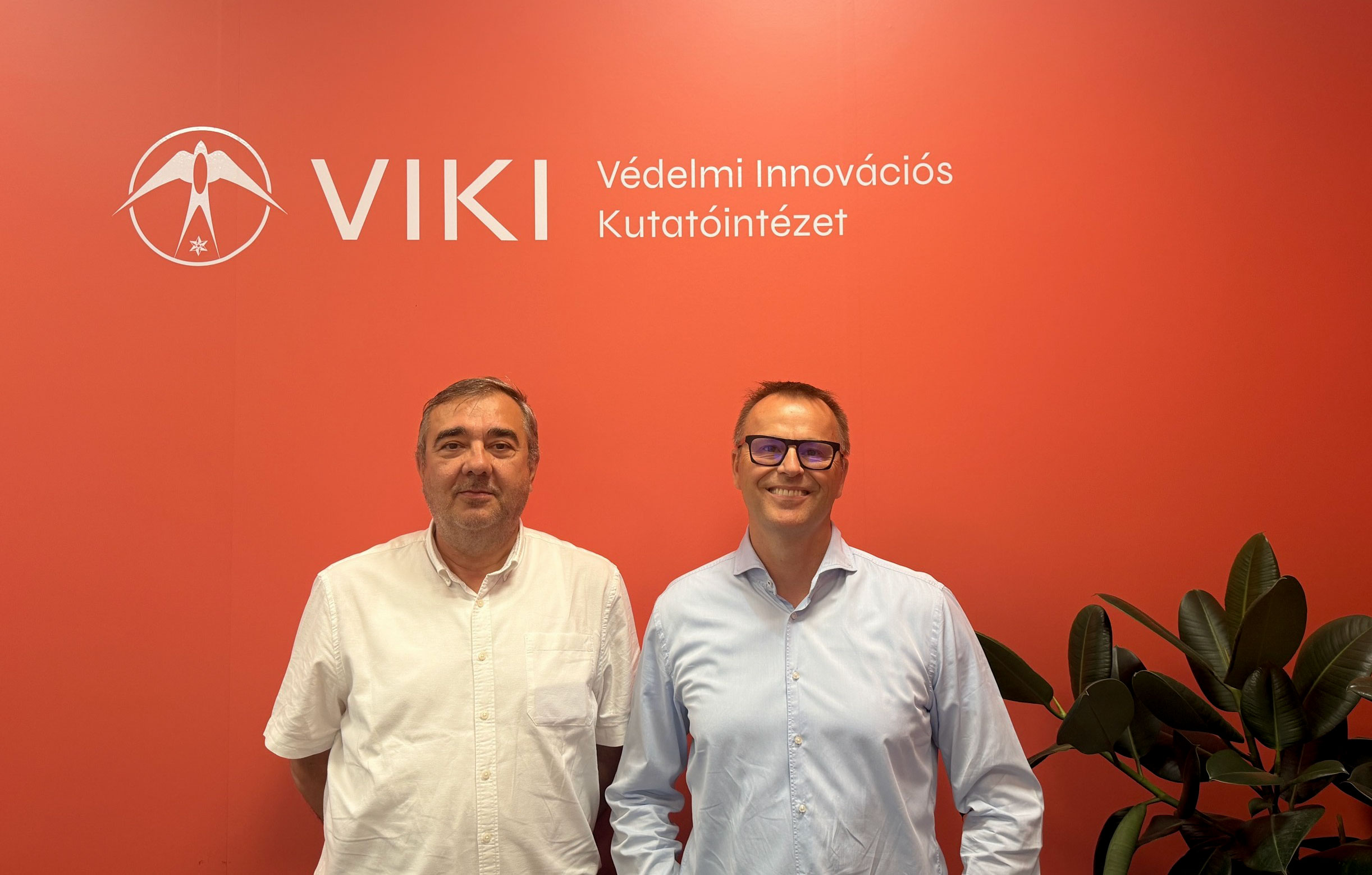
Hungarian National Focal Point for the EDF (European Defence Fund)
Senior Government Officer, Ministry of Defence
Defence Innovation Research Institute of Hungary

Subscribe to our newsletter and don’t miss out on our latest news!
Subscribe to our newsletter and don’t miss out on our latest news!

A chat használatához kérjük, fogadja el az alábbi dokumentumokat: